


Into the Mist: Discover Sa Pa’s Mountains, Villages & Culture
Aktualisiert: 10. März
In the mountains of northwest Vietnam near the Chinese border, you'll find a magical place called Sa Pa; often referred to as “City in the Fog” — and that for a very good reason. Mist frequently rolls through the valleys and across the rooftops, giving the town a dreamy, almost surreal atmosphere. Sitting about 1,500 meters (4,900 ft) above sea level, Sa Pa feels completely different from the rest of Vietnam, both in climate and scenery. Why? Because of its contrast. Coming from buzzing energetic cities, such as Hanoi, Sa Pa feels slower, cooler, and more peaceful. The diverse mix of mountain landscapes, cultural diversity, and shifting mist creates a place that feels both rugged and poetic.
Some Practical Tipps up front:
Trekking mountain landscapes: Sa Pa belongs to one of Vietnam’s best trekking destinations. Located near the Hoang Lien Son range, various trails lead through valleys, bamboo forests, ethnic minority villages, and rice terraces. You can either hike independently or book a local guide — from half-day walks to multi-day treks with homestays. Choose wisely according to your fitness level, as the valleys might be steep and - depending on weather conditions- slippery and very muddy.
Consider unstable weather conditions: Sa Pa’s weather can change very quickly. It may be sunny in town but foggy or damp in the valley. Pack a light rain jacket, proper hiking shoes, and maybe a small umbrella to be prepared.
Cooling climate: Thanks to its elevation, Sa Pa is much cooler than the rest of Vietnam. Winters can get very cold (occasionally near freezing), so check the forecast and pack accordingly. Stalls and stores for outdoor equipment are all over town; however, in most cases more expensive than outside of Sa Pa.
Bring cash: Smaller stalls, markets, and some ticket counters often accept cash only. ATMs are available, but it’s smart to carry some Vietnamese dong with you.
Ethnic Minority Culture: Sa Pa is home to several ethnic minority groups, including the H’Mong, Dao (Red Dao), Tay, and Giay communities. Traditional clothing, local markets, handicrafts, and village life are a central of the experience, which is why I'd recommend booking a local guide or staying in a homestay when having the chance!
Cultural sensitivity: If you choose to rent traditional clothing or take photos, please remember to do so respectfully. Keep in mind that for many locals, this is both their cultural heritage and their livelihood. A smile and a polite interaction go a long way.
Your Sa Pa Adventure: Mountains, Villages & Local Flavors
Y Linh Ho & Lao Chai Village: trek through foggy valleys, terraced rice fields and learn about ethnic minority communities
Cat Cat Village: exploring ethnic minority village traditions
Moana Viewpoint: panoramic vistas and perfect photo spots in misty mountain settings
Sa Pa Night Market: feasting on sizzling BBQ, local delicacies, and famous street eats
Getting to Sa Pa: Travel Options from Hanoi and Beyond
First things first: there’s no airport in Sa Pa. The mountain town sits high up in northern Vietnam, so you’ll always arrive by road (or partly by rail). Most travellers start their journey from Hanoi, which is about 5–6 hours away.
Here are the main options of transfer to choose from: a) night bus, b) train, c) private transfer
a) Night Bus (my personal preference)
Night buses in Vietnam are surprisingly comfortable and incredibly convenient. Most sleeper buses offer fully reclining beds — and in my case, I even had a small private cabin with a pillow, blanket, air conditioning, and reading lights. You simply pull the curtain closed, settle in, and drift off while the bus makes its way through the mountains. Waking up in Sa Pa the next morning feels pretty effortless.
Leaving Hanoi at night and arriving early in Sa Pa also means you save both time and a night’s accommodation — always a bonus when traveling.
Most buses don’t have toilets on board, but they stop every 1.5–2 hours for short breaks. This gives you time to use the restroom or grab a quick snack or drink. Toilets at rest stops usually charge a small fee, so it’s helpful to carry some small change.
One thing to keep in mind: the final stretch up to Sa Pa is quite winding, with plenty of curves and serpentines. If you’re prone to motion sickness, taking something beforehand might be a good idea. And let’s just say… heavy drinking the night before probably won’t make the ride any smoother.
Overall, the night bus is budget-friendly, comfortable, and flexible, with frequent departure times. You can easily book tickets online through platforms like 12Go Asia, GetYourGuide, Klook, or Viator.
b) Train (to Lao Cai + Transfer)
There’s no direct train to Sa Pa itself. Instead, you take a train from Hanoi to Lao Cai, which takes about 7–8 hours (usually overnight). From Lao Cai, it’s another 45–60 minutes by bus or taxi up to Sa Pa.
You can choose between basic sleeper cabins or more comfortable tourist trains with private compartments. Benefits for taking the train are based on more space to move around whilst traveling. It can also be a "new travel experience" you want to take with you, and, it can be reasonable choice if you prefer trains over buses.
The downside clearly lies in the higher complexity of traveling by having to change twice (from train to bus), longer travel time.
c) Private Car or Taxi
Besides buses and trains, you can of course also arrange a private car, taxi, or transfer service from Hanoi to Sa Pa. This option is especially appealing if you value flexibility, privacy, and a bit of extra comfort. You’ll be picked up directly at your accommodation and dropped off right at your hotel. No (extra) transfers, no waiting around.
The drive still takes around 5–6 hours, depending on traffic and weather conditions, so you won’t necessarily save much time compared to other options. However, if you’re traveling with friends or family, the cost can be shared, which makes it more reasonable. As you can expect, a private transfer is the most expensive way to reach Sa Pa.
So, which option to take?
If you’re on a budget and want to save time, the night bus is a very practical choice.
If you value comfort and don’t mind an extra transfer, the train is a relaxed alternative.
If you’re traveling with friends or family and want convenience, a private car might be worth the extra cost.
When to Visit Sa Pa: Choosing the Best Season for You
The best time to visit Sa Pa really depends on what you’re looking for — and how well you handle cooler mountain weather. Each season has its own charm, and honestly, there isn’t a “wrong” time to come. It just feels different throughout the year.
Spring (March – May) brings mild temperatures between 10–22°C and blooming flowers across the hills. After the crisp winter months, the air still feels fresh and cool, but much more comfortable. There’s occasional rain, and mornings and evenings can still be quite foggy. It’s a gentle, peaceful time to visit, with soft colors returning to the landscape.
Summer (June – August) is when the rice terraces turn a vibrant, almost unreal shade of green. Temperatures range from 18–25°C, making it the warmest season in Sa Pa. But warmth comes with humidity and the highest rainfall of the year. Expect muddy trekking paths and sudden fog rolling into the valleys. If you don’t mind a little rain, you’ll be rewarded with incredibly scenery.
Autumn (September – November) is often considered the perfect trekking season. The weather becomes drier and slightly cooler again, with temperatures between 15–22°C. The rice fields slowly transform into a golden sea just before harvest — easily one of the most beautiful sights in northern Vietnam. Visibility is usually at its best, making this season ideal for panoramic views and photography.
Winter (December – February) is when Sa Pa truly earns its nickname, the “City in the Fog.” Temperatures range from 3–15°C and can drop to 0°C or even below. It can feel surprisingly cold, dark, and misty; sometimes you’ll even see frost or rare snowfall. But there’s something magical about it. The mist wrapping around the mountains creates a mysterious atmosphere. And honestly, where else in Vietnam can you experience winter like this?
So, whatever season you pick- there is not right or wrong, just personal preference!
Fansipan: conquering Vietnam's highest peak
Fansipan definitely ranks among my all-time favourite sightseeing spots in all of Vietnam, and it absolutely deserves a place on your travel itinerary! If you skip it, you’re truly missing out on something spectacular.
Rising 3,143 meters above sea level, Fansipan is not only the highest mountain in Vietnam but in all of Indochina — which is why it’s proudly called the “Roof of Indochina.” Located just outside Sa Pa in the Hoàng Liên Sơn mountain range, it’s without a doubt one of the region’s most iconic highlights.
To reach the summit, you have two options: take the cable car (the “normal people” choice) or hike to the top with a licensed guide, which takes 1–2 days and requires very good physical condition; it’s steep and challenging!
If you choose the cable car, simply hop on the train toward Sun World Fansipan and continue by cable car up the mountain. The ride alone is an experience: it holds a Guinness World Record as one of the longest non-stop three-rope cable car systems in the world and takes about 20–25 minutes to reach the top.
On the way up, you’ll be rewarded with breathtaking panoramic views over lush rice terraces and rocky mountain wall formations. At one point, everything around you might be completely covered in white (which, to be honest, can be a bit scary) until suddenly you rise above the clouds. What makes it even more magical is that the weather in town often doesn’t reflect what’s happening “on the other side.” While it may be rainy, foggy, and grey in Sa Pa, Fansipan itself can be glowing in brilliant sunshine with clear blue skies.
Once you arrive, your actual adventure has just begun. To reach the actual summit, you’ll need to conquer roughly 600 steps. Along the way, you’ll pass temples, pagodas, resting areas, and views that honestly feel like heaven. Standing above the clouds is one of those rare moments that’s impossible to fully describe and impossible to forget.
There are only limited stalls for food and drinks, so it’s wise to bring some light snacks and water. And don’t be fooled by sunshine; even if you’re sweating from hiking up the mountain it can be surprisingly cold at the top.
A little foodie tip: at the cable car station, you’ll find options like hot dogs, pizza, burgers, and noodle dishes such as pho. But the real highlight? Bánh đồng xu phô mai — the famous “cheese coin cake.” If you love cheese as much as I do, give it a try. You won’t regret it- it's warm, chewy and has that lovely cheese string you're looking for!
Plan at least half a day for this experience so you can truly soak in the scenery. It’s more than worth the visit.
Y Linh Ho & Lao Chai Village: trek through foggy valleys, terraced rice fields and learn about ethnic minority communities
Sa Pa offers a wide variety of beautiful hiking routes, ranging from easy half-day walks to moderate full-day or even multi-day treks. As mentioned earlier, you can explore independently or hire a local guide — and I highly recommend the latter. Trekking with a local not only ensures a smoother experience, but also allows you to gain deeper insight into village life, traditions, and the cultural heritage of the region’s ethnic minority communities.
Popular routes include the Lao Chai–Ta Van trek, the summit hike of Fansipan (important: this trek must be done with a licensed guide and cannot be completed independently!), Ta Phin Valley, Muong Hoa Valley, and — as in my case — the scenic trail from Y Linh Ho to Lao Chai.
Y Linh Ho to Lao Chai Trek
This relatively easy trek leads you deep into the heart of the Muong Hoa Valley. Many guided tours begin in the town center, often meeting near the iconic Sa Pa Stone Church. From there, the group sets off on foot, gradually descending into the valley.
The trail passes through Y Linh Ho, a quiet village primarily inhabited by the Black Hmong community. Along the way, you’ll follow narrow dirt paths winding between layered rice terraces, cross small wooden bridges, and observe everyday rural life.
One important tip: avoid wearing regular sneakers. The paths can be extremely muddy, especially after rain, and proper hiking shoes are essential. Expect slippery sections and embrace the adventure!
As you continue toward Lao Chai, the landscape opens into sweeping panoramic views of rice paddies carved into hillsides. The scenery is truly unforgettable; no photograph quite captures the scale and beauty of the valley in person.
Beyond its natural beauty, the trek offers meaningful cultural experiences. You may learn about traditional farming techniques, indigo dyeing, embroidery, and the customs of the ethnic minority groups who have called this region home for generations.
Most guided treks conclude with a simple but satisfying shared lunch — typically including rice, vegetables, tofu, chicken, and soup. It’s a wonderful opportunity to rest, connect with fellow travelers, and reflect on the day’s experience. Afterwards, a small bus or van usually transfers you comfortably back to town.
Altogether, it’s a rewarding blend of breathtaking landscapes, cultural immersion, and gentle adventure. Certainly one of the highlights of any visit to Sa Pa.
CatCat Village: exploring ethnic minority village traditions
Just about 2–3 km from Sa Pa’s town center, CatCat Village marks one of the most popular tourist attractions in Sa Pa. Cat Cat Village itself dates back to the 19th century and was established by H’Mong families, making it one of the oldest highland settlements in the region.
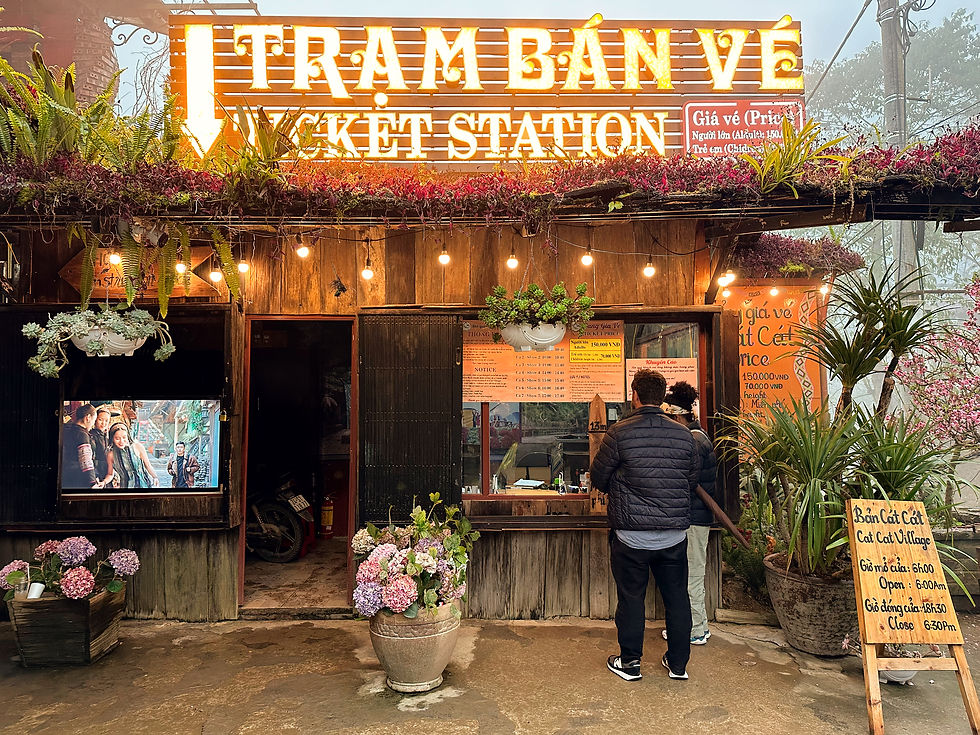
Upon arrival, you’ll pay a small entrance fee before beginning your descent along what feels like an endless path of stone steps. Along the way, you’ll pass numerous souvenir stalls selling hand-embroidered textiles, indigo-dyed jackets, pleated skirts, colorful headscarves, and silver jewellery typical of the H’Mong people. As you continue downhill, the scenery gradually opens up to terraced rice fields, wooden houses, small waterfalls, bamboo bridges, and water wheels turning gently in the stream below. The setting truly feels like a postcard. And yes, the familiar “buy something” calls will likely follow you all the way to the valley. On foot, it takes around 30–40 minutes to reach the village, depending on how often you stop to admire the views — and trust me, you will (unless you happen to visit on a foggy day, wrapped in thick grey mist).
Throughout the day, the village hosts traditional cultural performances, usually scheduled at set times (often late morning and mid-afternoon). These dance shows feature traditional H’Mong music, colourful costumes, and folk dances that reflect local customs and courtship rituals. While clearly arranged for tourists, they still offer insight into the region’s cultural heritage and are worth watching if you’re curious about traditional mountain life.
You’ll also notice several photo opportunities designed for visitors: rental stands where you can dress up in traditional H’Mong clothing for pictures, decorative swings overlooking the valley, and even horses posed near the river for scenic snapshots. Whether you participate or simply observe is entirely up to you. For me, they were a reminder of the delicate balance between preserving culture and adapting to tourism.
And here’s something important: what goes down must come back up. The return to Sa Pa town involves climbing all those steps again. It’s a bit of a workout, especially in humid weather, but manageable if you take your time. Alternatively, motorbike taxis are usually available near the exit if you’d prefer a ride back up.
Is Cat Cat Village touristy? Yes. But it’s also undeniably beautiful. If you slow down, look beyond the souvenir stalls, and notice the quieter corners — women carefully stitching intricate embroidery, elders chatting outside wooden homes, children running along the paths — you will be able to see more than just a tourist attraction: you will find a community adapting to modern travel while holding onto its roots. And that, to me, made it worthwhile visiting.
Moana Viewpoint: panoramic vistas and perfect photo spots in misty mountain settings
Moana is a favourite destination for photography enthusiasts visiting Sa Pa. Located at 68 Violet Street in Cầu Mây Ward, it offers breathtaking views of the Hoàng Liên Sơn mountain range. It’s easily accessible on foot from the town center, making it a convenient stop during your stay.
There is a small entrance fee upon arrival, but once inside, you’re rewarded not only with magnificent scenery, but also with thoughtfully designed photo installations set against the dramatic mountain backdrop. A charming little café on site invites visitors to sit down, relax, and soak in the views.
Some of the most popular photo spots include the Heaven Gate staircase, the elegant Moana girl statue, and the iconic Bali-style gate. Depending on the time of day and season, it can be challenging to capture crowd-free photos, especially during peak travel periods, but it is absolutely worth the visit- even if for a short stopover.
Moana is more of a creative photo destination than a trekking or cultural sightseeing site, yet it’s a worthwhile addition to any Sa Pa itinerary. One of my personal favourites was the “hand in the air” sculpture, which you can climb for photos. When surrounded by mist, it feels as though you’re stepping into nothingness.
Sa Pa Night Market: feasting on sizzling BBQ, local delicacies, and famous street eats
If you’d like to sample local dishes and share a meal among residents, the Sa Pa Night Market is well worth a visit. As dusk falls, a collection of stalls fills a compact, easy-to-explore square, creating a lively yet cozy evening atmosphere.
While you’ll find a few jewelry and souvenir stands, the true highlight here is the food — especially the wide variety of barbecue options. The cuisine in Sa Pa feels distinctly different from the street food you may know from Hanoi, Ho Chi Minh City, or Hoi An. Dried fruits and meats are common specialties, alongside freshly grilled skewers prepared right in front of you.
Choosing your meal is part of the fun: simply take a small basket and fill it with whatever you’d like grilled. Hand it to the grill master, pay, and then wait as your selection is slowly smoked to perfection. Options range from fresh vegetables (e.g. corn, salad, eggplant, mushrooms) to varying meat options (buffalo meat, pork, beef, chicken, chicken feet, frogs) and seafood (fish, fishballs).
Take into consideration that evenings in Sa Pa can be cool and foggy, so bringing a jacket and an umbrella is a good idea. The night market itself isn’t large, but it’s a charming experience that’s worth doing at least once.
If the local specialties feel a bit adventurous, there are also plenty of Western-style restaurants in town, including familiar chains such as Starbucks, as well as places serving vegan dishes, pizza, burgers, and pasta. Still, I highly recommend trying the local cuisine — at the very least, don’t miss the colorful sticky rice cooked in bamboo tubes. It’s a simple yet memorable treat and a great introduction to the flavors of the region.
More local food recommendations can be found in the section below.
Local Eats: savouring authentic mountain dishes
Now, this is a fantastic part! Generally speaking, the food in Sa Pa is heartier, smokier, and far less sweet than what you might know from southern Vietnam. Its cuisine is deeply shaped by the traditions of the ethnic minority communities who have lived in these mountains for generations — including the Hmong, Dao, Tay, and Giay people.
Sa Pa’s food is, in many ways, a direct reflection of its surroundings: cool mountain air, high-altitude farming, and the self-sufficient rhythm of village life. And when you think about it, that makes perfect sense. Life in the highlands means cooking with what the land provides. Corn, sticky rice, forest herbs, free-range livestock, and freshwater fish form the base of many meals.
Cooking methods are practical, rustic, and beautifully simple. These include, for example, grilling over charcoal, smoking meat above fire, slow-simmering stews, or preparing rice inside bamboo tubes. The result? Comforting, soul-warming dishes. Hotpots, grilled meats, and smoked specialties are especially popular.
Many of Sa Pa’s most iconic dishes come directly from minority traditions and represent more than just nourishment, as they carry cultural meaning.
The Hmong community, for example, is known for smoked buffalo meat and black chicken (gà đen/ gà ác) prepared with medicinal herbs. Sticky rice (cơm lam), which is cooked in bamboo tubes, sometimes naturally dyed with forest leaves in vibrant colors, plays an important role in festivals and ceremonies. And homemade corn wine or apple wine (rượu táo mèo) is often shared during communal meals, symbolizing hospitality and togetherness.
Heres's an overview of iconic local dishes you should not miss:
Cơm lam (Sticky rice in bamboo): sticky rice cooked inside bamboo tubes over charcoal, either plain or in colour. Once done, you simply crack the outer "shell" open. The rice has a subtle smoky aroma, is yet soft, slightly chewy in texture. It’s usually served as a side dish for meat.
Rượu táo mèo (wild apple wine): walking around town, you will find plenty of places offering free samples of this local delicacy. Rượu táo mèo is strong liquor made from wild forest apples grown in the mountains. To me personnaly, it is way too sweet. However, on cold and foggy days, it can be a true heart- and soul warmer. It is often shared during meals or celebrations.
Gà đen/ Gà ác (black chicken): a specialty of the Hmong community. Rich in flavour, black chicken meat is darker and stronger in taste than regular chicken breast of thighs, also due to the fact that it is steamed over charcoal. Oftentimes, the meat is not only grilled, but steamed and/or cooked in herbal soups.
Lẩu cá hồi / Lẩu cá tầm (salmon or sturgeon hot pot): thanks to Sa Pa’s cool climate, salmon and sturgeon are farmed locally; therefore fresh and tender in taste. The broth is usually light and slightly sour, served with fresh vegetables and herbs.
Bánh hạt dẻ (chestnut cake): these little round cakes are made from local chestnuts grown in the region. They look a bit like a cookie, yet can be found all over Sa Pa. It is often paired with tea. For me, not my cup of tea, but all a matter of taste.
Đồ nướng (mountain BBQ): Now, as for BBQ- that's THE thing! Grilled skewers are everywhere, day- and nigh-time alike! Expect marinated pork, beef, chicken feet, mushrooms, corn, and more — all charcoal-grilled. For a brilliat variety of options, I recommend visiting Sa Pa's night market. I promise, there will be something for everyone's flavour and personal preference. Dig in and enjoy!
Now, it's your turn! Let me know what you liked most about Sa Pa or what you would fancy trying out!
If you liked this post, share a heart and let me know in the comments.


Kommentare